
Why Aaron Rai’s Iron Covers and Two Gloves Just Ruined Every Unwritten Rule in Golf
If you were looking at the data models heading into Sunday at Aronimink, Aaron Rai wasn't supposed to win the Wanamaker Trophy. The analytics gave him a meager 3.6% chance. He was sharing a crowded, volatile leaderboard with eight major champions, chasing down giants like Jon Rahm and Rory McIlroy. He isn't a bomber who destroys par-5s with 330-yard carries, and his equipment looks like it belongs to a dedicated weekend grinder rather than a world-class professional.
Yet, there he was on the 17th green, coolly rolling in a mind-boggling 69-foot birdie putt to put an exclamation point on a flawless final-round 65.
With that putt, the 31-year-old Englishman didn't just secure a three-shot victory; he broke a 107-year drought to become the first golfer from England to win the PGA Championship since Jim Barnes in 1919.
But if you look past the historic stat lines and the massive $3.68 million paycheck, the real story of Aaron Rai is how he did it. In an era of optimized launch angles, massive corporate endorsements, and cookie-cutter player profiles, Rai is a beautifully stubborn throwback. He won the biggest tournament of his life exactly how he wanted to—iron covers, dual gloves, seven-year-old driver and all.
The Quirks That Confuse the Purists
If you watch Rai on the coverage, the visual anomalies hit you immediately. In a sport obsessed with aesthetics and unwritten locker-room codes, Rai proudly embraces two habits that usually get a player roasted at their local club: iron covers and two gloves.
To the casual observer, it looks like extreme superstition or an eccentric gimmick. But the moment you look into the backstory, you realize these choices aren't about quirkiness at all. They are about respect, family, and remembering exactly where he came from.
Why the Iron Covers?
In professional golf, iron covers are considered the ultimate amateur faux pas. Tour pros get their clubs for free, often changing out wedges every few weeks. They have access to premium equipment trucks every Monday morning.
But Rai keeps neoprene covers on every single iron in his bag.
The tradition started when he was a kid in Wolverhampton. His father, Amrik, made massive financial sacrifices to support Aaron's junior golf career. Quality clubs were an immense luxury for the family. When his dad managed to buy him a nice set, he taught Aaron to treat them like gold. His dad would meticulously clean the grooves after every single session to keep them in perfect condition.
Leaving the iron covers on today isn't a tactical choice for Rai; it's a daily, tangible reminder of his father’s sacrifices. It's a way to maintain perspective and show gratitude for the tools that allowed him to build a career.
The Story Behind the Two Gloves
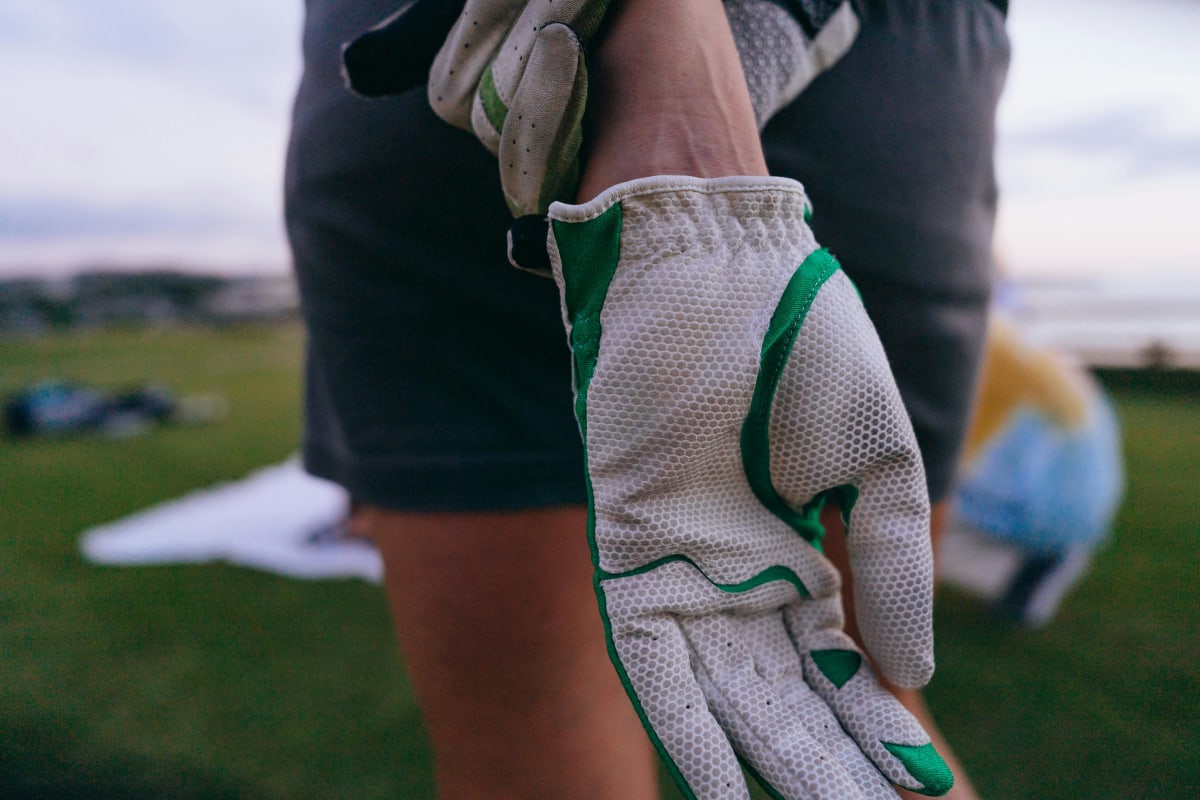
Then there’s the two-glove look. Outside of a freezing morning or a torrential downpour, virtually every modern pro wears a single glove on their lead hand. Rai, however, sports a pair of black gloves on every single shot, year-round.
This one stems back to his childhood as well. When he was eight years old, a local manufacturer gave him a pair of gloves to try out. He wore them during a practice round, played incredibly well, and the sensation simply stuck. For over two decades, the feeling of having both hands covered has been essential to his grip and mechanics. It’s a comfort zone he refused to abandon just to fit into the traditional image of a touring professional.
Standing Tall in the Age of Power Golf
Rai's entire bag is a masterclass in "if it isn't broken, don't fix it." While other players change club models faster than the seasons change, Rai secured his major championship using a seven-year-old TaylorMade M6 driver.
On Sunday at Aronimink, that commitment to his own game plan was the difference maker. On the monstrous 530-yard, par-4 15th hole—a place where modern sports science dictates you hit the ball as hard and as far as humanly possible—Rai calmly took less than driver off the tee to ensure he found the short grass. On the 12th, when faced with a tricky spot behind the green, he ignored conventional wisdom and chose to chip rather than putt, catching the broadcast analysts completely off guard.
He didn't try to play like Jon Rahm or Rory McIlroy. He played like Aaron Rai.
"Sometimes when you don't practice enough, the game finds you out... The game always knows." — Advice given to Rai during his rookie year on the European Tour.
At Aronimink, the golfing gods clearly decided that Rai's work ethic, humility, and quiet discipline deserved to be rewarded. Watching him walk up the 18th fairway with gloves on both hands, ready to lift one of the most prestigious trophies in sports, was a refreshing reminder of what makes golf great. You don't have to fit the mold to win. Sometimes, staying true to your roots is the best competitive advantage you can have.
Photo by Mikhail Nilov from Pexels: https://www.pexels.com/photo/hand-in-white-and-green-glove-9207644/
☀️ Morning 9 — Daily News
9 curated golf stories delivered to your inbox every morning.
No fluff, No spam. Just great golf content.